A Food Lover’s Complete Guide to China’s Regional Cuisines
- Shane Chapman
- May 15
- 7 min read

(And Why Learning Mandarin Will Transform How You Eat)
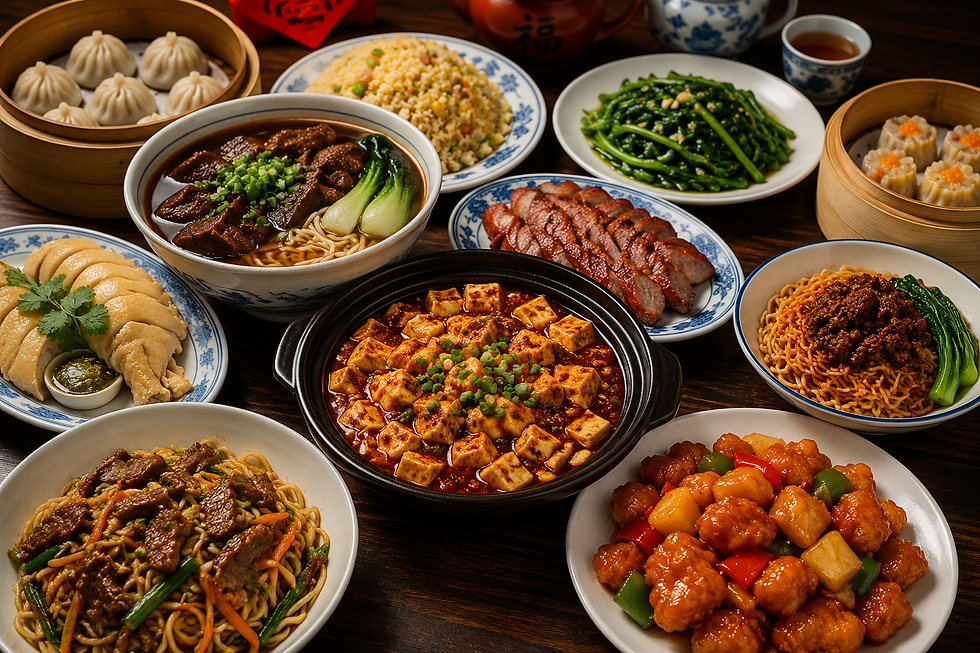
There’s a moment every traveller to China eventually experiences. You’re standing in front of a street stall, steam rising from a bubbling wok, the smell is incredible, and you have absolutely no idea what you’re about to eat — or how to ask for it. Maybe you point at random. Maybe you hand over some yuan and hope for the best.
Now imagine instead leaning forward and asking:
这个辣吗? (Zhège là ma?) — “Is this spicy?”
Suddenly the vendor smiles. The atmosphere changes. You are no longer just another tourist passing through. You’re interacting, connecting, participating.
That is the power of language at the dinner table.
China has one of the most diverse, regional, and deeply cultural food traditions on earth. The country’s famous culinary regions are so different from one another that they almost feel like separate cuisines entirely.
And just as learning Mandarin opens doors to over a billion people, understanding Chinese food culture opens doors to one of the richest culinary experiences in the world.
In this guide, we’ll travel through China’s major regional cuisines, explore famous dishes, learn useful Mandarin food vocabulary, and look at why learning Mandarin completely changes the way you experience Chinese food and culture.
Along the way, I’ll also explain why I recommend Rocket Languages Chinese as one of the best structured ways to begin learning real conversational Mandarin.
As a side note: My girlfriend is from the Dongbei region. After all my travel around the Far East (during my time in the Navy) I thought I had tasted everything there was to eat for Chinese Food.
I was so very wrong, my girlfriend always seems to surprise me with a new delicious dish that I have never had before. Eating with my Chinese girlfriend is not just a meal, it is a warm and very special experience.
Why Chinese Food Culture and Mandarin Go Hand in Hand
One of the biggest surprises for many travellers is discovering that “Chinese food” is not one single cuisine. China officially recognises eight major culinary traditions (八大菜系, bā dà càixì), each shaped by geography, climate, trade, agriculture, and history.
The difference between Sichuan hotpot and Cantonese dim sum is enormous — almost like comparing Italian food to Mexican food. Yet both are Chinese.
Food vocabulary is also deeply connected to the Chinese language itself. Many dish names contain historical references, regional humour, poetic meanings, or cultural stories that are completely lost in English translation.
Take this famous Sichuan dish:
夫妻肺片 (Fūqī Fèipiàn) — often translated as “Husband and Wife Lung Slices.”
The name sounds shocking in English, but the real story behind it is cultural and historical rather than literal.
Understanding Mandarin allows you to appreciate these layers of meaning instead of simply reading awkward translations from tourist menus.
This is why combining Mandarin learning with food exploration works so well. Food creates emotional memory. You remember vocabulary far more easily when it’s connected to flavours, smells, conversations, and experiences.
That is one reason I recommend Rocket Languages. Their lessons use real conversational situations — including restaurants, markets, ordering food, asking questions, and interacting naturally with native speakers. Instead of memorising isolated words, you learn language in context.
China’s Eight Major Culinary Traditions
1. 四川菜 (Sìchuān Cài) — Sichuan Cuisine
The Bold Flavour: Spice, Heat & Complexity
Sichuan cuisine is probably China’s most internationally recognised regional cuisine. Famous for its intense chilli heat and mouth-numbing peppercorn sensation, it is bold, social, loud, and unforgettable.
The defining flavour combination is:
麻辣 (má là) — “numbing and spicy.”
This comes from combining chilli peppers with Sichuan peppercorns (花椒, huājiāo), which create a strange tingling sensation on the tongue.
Famous Sichuan Dishes
麻婆豆腐 (Má Pó Dòufu) — Mapo Tofu
宫保鸡丁 (Gōngbǎo Jīdīng) — Kung Pao Chicken
担担面 (Dàndān Miàn) — Dan Dan Noodles
火锅 (Huǒguō) — Sichuan Hotpot
我要一份麻婆豆腐,不要太辣。(Wǒ yào yī fèn má pó dòufu, bù yào tài là.)— “I’d like one Mapo Tofu, not too spicy please.”
Sichuan food is also deeply social. Hotpot restaurants are places where friends sit together for hours eating, drinking, talking, and laughing. Being able to communicate in Mandarin transforms the experience completely.
2. 粤菜 (Yuè Cài) — Cantonese Cuisine
The Refined Flavour: Freshness & Balance
If Sichuan cuisine is intense and fiery, Cantonese cuisine is refined and elegant.
Cantonese cooking focuses on preserving the natural flavour of ingredients rather than covering them with heavy sauces. Fresh seafood, delicate steaming techniques, and precise wok cooking are central to the cuisine.
Famous Cantonese Dishes
点心 (Diǎnxīn) — Dim Sum
烧腊 (Shāolà) — Cantonese BBQ
白切鸡 (Báiqiē Jī) — White Cut Chicken
蒸鱼 (Zhēng Yú) — Steamed Fish
一笼虾饺,谢谢!(Yī lóng xiā jiǎo, xièxiè!)— “One basket of har gow please!”
Dim sum culture is especially important in southern China and Hong Kong. Ordering from carts, drinking tea, and sharing dishes is part of a social ritual called 饮茶 (yǐn chá) — “drinking tea.”
3. 鲁菜 (Lǔ Cài) — Shandong Cuisine
The Ancient Flavour: Rich, Savoury & Imperial
Shandong cuisine is one of the oldest culinary traditions in China and strongly influenced imperial cooking in Beijing.
The cuisine uses seafood, vinegar, soy sauce, braising techniques, and rich savoury flavours.
Famous Shandong Dishes
糖醋鲤鱼 (Tángcù Lǐyú) — Sweet and Sour Carp
德州扒鸡 (Dézhōu Pá Jī) — Dezhou Braised Chicken
葱烧海参 (Cōng Shāo Hǎishēn) — Braised Sea Cucumber
🗣 请问,这道菜是怎么做的?(Qǐngwèn, zhè dào cài shì zěnme zuò de?)— “Excuse me, how is this dish made?”
4. 苏菜 (Sū Cài) — Jiangsu Cuisine
The Elegant Flavour: Mild, Sweet & Beautifully Presented
Jiangsu cuisine, especially Huaiyang cuisine, is often considered one of the most technically refined styles in China.
Presentation matters enormously here. Knife work, texture, colour, and balance are treated almost like art forms.
Famous Jiangsu Dishes
狮子头 (Shīzitóu) — Lion’s Head Meatballs
文思豆腐 (Wénsī Dòufu) — Wensi Tofu
软兜长鱼 (Ruǎndōu Cháng Yú) — Braised Eel
The flavours are gentle and balanced rather than overpowering.
5. 浙菜 (Zhè Cài) — Zhejiang Cuisine
The Fresh Flavour: Seafood & Delicacy
Zhejiang cuisine comes from the Hangzhou and coastal regions. Fresh seafood, rice wine, and seasonal ingredients dominate the cuisine.
Famous Zhejiang Dishes
东坡肉 (Dōngpō Ròu) — Dongpo Pork
龙井虾仁 (Lóngjǐng Xiārén) — Longjing Tea Prawns
西湖醋鱼 (Xīhú Cù Yú) — West Lake Fish in Vinegar Sauce
🗣 这是用绍兴酒做的吗?(Zhè shì yòng Shàoxīng jiǔ zuò de ma?)— “Is this made with Shaoxing wine?”
6. 闽菜 (Mǐn Cài) — Fujian Cuisine
The Umami Flavour: Soups, Seafood & Broths
Fujian cuisine is famous for complex soups, seafood, mushrooms, and deeply savoury broths.
Famous Fujian Dishes
佛跳墙 (Fó Tiào Qiáng) — Buddha Jumps Over the Wall
沙茶面 (Shāchá Miàn) — Satay Noodles
荔枝肉 (Lìzhī Ròu) — Lychee Pork
Fujian cuisine also heavily influenced many Southeast Asian Chinese food traditions through migration and trade.
7. 湘菜 (Xiāng Cài) — Hunan Cuisine
The Pure Heat Flavour: Chilli, Smoke & Intensity
Hunan cuisine is fiery like Sichuan cuisine, but without the numbing peppercorn sensation.
Where Sichuan focuses on 麻辣 (má là), Hunan cuisine focuses on pure chilli heat.
Famous Hunan Dishes
剁椒鱼头 (Duòjiāo Yútóu) — Fish Head with Chopped Chilli
毛氏红烧肉 (Máo Shì Hóngshāo Ròu) — Chairman Mao’s Braised Pork
湘西腊肉 (Xiāngxī Làròu) — Smoked Pork
能不能少放一点辣椒?(Néng bu néng shǎo fàng yīdiǎn làjiāo?)— “Could you use a little less chilli?”
8. 徽菜 (Huī Cài) — Anhui Cuisine
The Rustic Flavour: Mountain Herbs & Slow Cooking
Anhui cuisine is less internationally known but deeply traditional. It uses preserved ingredients, wild herbs, mountain vegetables, and slow braising methods.
Famous Anhui Dishes
臭鳜鱼 (Chòu Guìyú) — Stinky Mandarin Fish
毛豆腐 (Máo Dòufu) — Furry Tofu
红烧划水 (Hóngshāo Huáshuǐ) — Braised Carp Tail
These dishes can be challenging for foreigners at first, but they represent centuries of regional tradition and local identity.
Learning Mandarin Through Food
Food is one of the best ways to learn a language because it creates emotional memory.
You remember vocabulary more easily when it is attached to:
flavours
smells
conversations
travel experiences
cultural moments
If you learn the word 辣 (là) while eating something incredibly spicy, you will probably never forget it.
That is why practical conversational learning matters so much. In my experience, many Mandarin learners struggle because they memorise vocabulary lists without ever connecting the language to real life.
That is another reason I recommend Rocket Languages. The lessons are structured, practical, and built around real conversational situations instead of isolated textbook exercises.
Essential Mandarin Food Vocabulary
Tastes & Flavours
辣 (là) — Spicy
甜 (tián) — Sweet
酸 (suān) — Sour
苦 (kǔ) — Bitter
咸 (xián) — Salty
鲜 (xiān) — Fresh / Umami
香 (xiāng) — Fragrant
Useful Restaurant Phrases
好吃!(Hǎo chī!) — Delicious!
请给我菜单。(Qǐng gěi wǒ càidān.) — Please give me the menu.
我不吃肉。(Wǒ bù chī ròu.) — I don’t eat meat.
我对花生过敏。(Wǒ duì huāshēng guòmǐn.) — I’m allergic to peanuts.
买单!(Mǎidān!) — The bill please!
Final Thoughts: Eat, Explore, Speak
China’s food culture is endless. Every province, city, market, and small family restaurant tells part of a much larger story.
Learning Mandarin allows you to participate in that story instead of simply observing it from the outside.
You begin asking questions. Understanding menus. Talking with locals. Appreciating traditions. Connecting with people.
That is when travel changes from tourism into experience.
If you are serious about learning Mandarin properly — especially practical conversational Mandarin connected to real life and culture — I genuinely recommend trying Rocket Languages Mandarin.
Start with the language. Then book the flight. And don’t be afraid of the spicy food.



Comments